Tecmo Bowl
| Action | Key |
|---|---|
| Move / Control Players | Arrow Keys |
| Skip Opening / Confirm | Enter |
Where Strategy Meets The Strength Of The 1987 Field
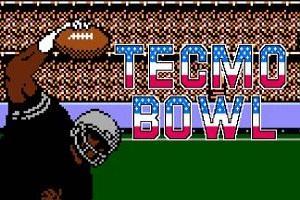
Tecmo Bowl puts you on an NFL field in 1987 and asks one question every possession: can you outguess the defense? The game is built around a four-play system where offense and defense each pick a play simultaneously – and if the defender calls the same play you do, the result is almost always a stop. That one mechanic turns a simple arcade football game into a genuine mind game, especially against another person.
There are no sliders, no injury reports, no salary caps. You pick a team, call a play, and try to move the ball. The whole game lives in that back-and-forth, and it holds up surprisingly well because the core tension never gets old.
Controls
The control scheme is minimal by design. Movement and timing do the work. Where you position your ball carrier before contact and when you commit to a throwing window matters more than input complexity. The game rewards spatial awareness over button combinations.
How the Play-Calling System Works
Before each offensive snap, both players select from a limited set of plays – typically four options split between runs and passes. The defense picks simultaneously without seeing the offense’s choice. If the defense calls the same play type the offense selected, the play is read before it develops. Runs get stuffed at or behind the line. Pass plays collapse before the throw.
That system is the whole game. It is not about execution in the way modern football titles are. It is about prediction. Do you trust your opponent to go run-heavy after two straight pass plays? Do you stay conservative on third down or take a shot? Every possession becomes a short series of guesses layered on top of each other, and the team with better instincts wins more consistently than the team with better reflexes.
What the Teams Actually Feel Like
Tecmo Bowl includes 12 teams, and they are not interchangeable. Player speed, blocking quality, and quarterback arm strength vary noticeably between rosters. Some teams are clearly built for running – their backs accelerate quickly through gaps and are difficult to bring down in open space. Others have a passing game that can stretch the field but struggle to move the ball on the ground when the defense reads the run correctly.
The teams available are NE, Jacksonville, Denver, Buffalo, Dallas, Green Bay, Carolina, Pittsburgh, Philadelphia, Indianapolis, San Francisco, and Minnesota. Each has a different feel on both sides of the ball, and switching teams between sessions gives the game more replayability than a single-roster retro title would.
A common first mistake is picking a team based on familiarity rather than playstyle. If your read-and-react timing is not consistent yet, a run-heavy team with a strong backfield is more forgiving than a pass-first offense that punishes mistimed throws.
Running the Ball vs. Throwing It
Running plays are lower risk. When the defense does not call the same play, a good run finds a lane quickly and picks up consistent yards. The downside is that predictable run-calling is easy to shut down – a defense that correctly reads a run on three consecutive plays stops drives cold.
Passing plays have higher upside but require better timing on the throw. An incomplete pass stops the clock and moves you closer to a punt. Against a human opponent who is watching your tendencies, going to the air at the wrong moment is an easy way to give up field position.
The better offensive approach is to establish enough of a run threat that the defense cannot commit to stopping it, then use pass plays at moments when the risk-reward tilts in your favor – third and long, or when you need a quick score late in a half.
1P vs 2P: Two Different Games
Against the CPU, Tecmo Bowl is a pattern-learning exercise. The AI has tendencies you can identify and exploit over time. Once you understand how the CPU responds to certain down-and-distance situations, winning becomes more about execution than prediction. It is a good environment for learning the play-calling structure without the pressure of a human opponent catching on.
Against another person, the game changes completely. Human opponents adapt. If you go run-heavy early, they start calling run defense. If you pass to adjust, they shift. The whole rhythm of play-calling becomes a live conversation, and the simple four-play system produces genuine tension because both players are trying to stay one step ahead simultaneously. That is the version of Tecmo Bowl that made it memorable – not the single-player game, but two people sitting together trying to outthink each other on every snap.
Where Runs Break Down and Drives Stall
Most failed drives in Tecmo Bowl share a common pattern: the offense becomes readable. Three runs in a row, or the same pass route twice in a short stretch, hands the defense an easy read. The play gets called correctly, the yards dry up, and a punt follows.
The other common breakdown is field position. A risky call deep in your own territory that gets read correctly – especially a pass that falls incomplete – leaves you punting from your own end zone and handing the opponent a short field. Tecmo Bowl is short enough that a single possession advantage can decide the game.
Against a human opponent, the worst thing you can do in a close game is establish a pattern and stay with it because it worked twice. The third time, it will not.
6 Observations That Help
- Mix run and pass plays even when one is working. Staying unpredictable forces the defense to split its guesses rather than committing to stopping one thing.
- Learn your team’s strongest play early. Every roster has a play that gains yards more reliably than the others. Use it as your base, not your whole offense.
- In 2P mode, pay attention to your opponent’s tendencies, not just your own. If they call the same defensive play twice in a row in similar situations, they are probably defaulting to a comfort call under pressure.
- Do not take unnecessary risks near your own end zone. A stopped play in bad field position often costs more than a conservative punt that pins the opponent deep.
- Use defense actively, not just as a waiting period between offensive drives. Correctly calling the same play as the offense on a key third down shifts momentum as much as a good offensive drive does.
- When trailing late, shift to a faster tempo on offense. The game clock is short, and conservative ball control when you are behind gives the opponent exactly what they want.
Playing in a Browser
Tecmo Bowl runs as an emulated NES ROM in the browser using JavaScript-based emulation. It works reliably on Chrome and Firefox on desktop. Safari can occasionally produce input lag on the arrow key controls – if movement feels delayed or unresponsive, switching to Chrome resolves it in most cases.
The game does not require significant processing power and loads quickly on most connections. On mobile, the lack of physical arrow keys makes it unplayable in any practical sense – this is a desktop-only experience.
Games in the Same Neighborhood
Tecmo Super Bowl – The direct successor, and the version most players consider the definitive Tecmo football game. It adds a full season mode, more teams, individual player stats, and a deeper roster.
4th and Goal – A modern browser football game that keeps the arcade pace of Tecmo Bowl but adds more play variety and a slightly deeper control scheme. It does not have the same retro feel, but players who enjoy the quick possession-based football structure of Tecmo Bowl will find it familiar.
Axis Football League – More complex than Tecmo Bowl, with a wider play selection and a longer game format. The pace is slower and the decisions more layered, but the core of calling plays and reading the opposition carries over. A good follow-up for players who want more depth without moving to a full modern simulator.
Retro Bowl College – Shares the retro visual style of Tecmo Bowl but is built around a modern game loop with roster management and season progression. The gameplay feel is different – Retro Bowl is a touch/click passing game rather than a play-call battle – but players drawn to the old-school aesthetic will find it immediately comfortable.
Frequently Asked Questions
Why does my play keep getting stopped before it starts?
The defense called the same play you did. This is the central mechanic – simultaneous play-calling means the defense can read and shut down an offensive play completely if the calls match. The solution is unpredictability, not better execution.
Are all 12 teams balanced?
No, and that is intentional. Some teams have noticeably faster players, stronger running games, or better passing options. The imbalance reflects the real NFL rosters of the era and adds a layer of team-selection strategy, especially in 2P matches where both players know which rosters are stronger.
Can two people play on the same keyboard?
Yes. Tecmo Bowl’s 2P mode is local and uses the same keyboard for both players, which is consistent with its original NES two-controller design. The control scheme is simple enough that sharing a keyboard is manageable.
Is there a season mode or just individual games?
Tecmo Bowl in its browser form plays as individual matches without a persistent season structure. Tecmo Super Bowl, available on the same site, includes a full season mode if that format appeals to you.
How long does a match take?
A typical game runs between five and fifteen minutes depending on how quickly possessions move. The fast pace makes it easy to play multiple games back to back, which is part of why it works well as a short-session game.
Tecmo Bowl Gameplay
Other Games